Monday, March 30, 2009

In The Works

In the interest of gearing this blog more toward reviews, I thought I'd make a quick post on what I am reading, watching, planning to read, etc.


Sex, Drugs, and Cocoa Puffs. Klosterman's voice is strong but the logical connections he makes in this book are actually rather annoying in how dubious and random they are. I was recommended this by a friend but I am having trouble finishing it. Part of it is that some (but not all) of the cultural references are lost on me, but even the ones that do reference things I know and know well have been mediocre.


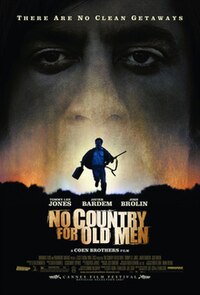
No Country For Old Men movie. I plan to watch this some time soon to compare it to the novel. I hope it enriches my experience, but I'm not sure what I expect. The casting seems very spot-on, although I did see previews before I read the novel.


Escapement by Jay Lake. I'm not going to lie, I was definitely attracted to this one by the pretty steampunk cover. It could be terrible, who knows, but I thought I would give it a go.

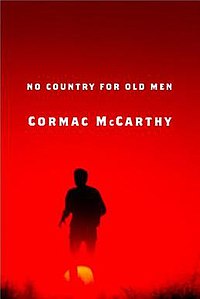
No Country For Old Men


This weekend I finished reading No Country for Old Men by Cormac McCarthy. McCarthy is generally regarded as one of the most important American novelists (although of course it depends who you ask), and No Country for Old Men is from 2005, and was adapted into the 2007 Coen brothers movie of the same name, which I have not yet seen.

The story is mainly about three characters. Ed Tom Bell is what I would call the main protagonist, and he is a sheriff in the county where the beginning of the novel takes place. Anton Chigurh is the main antagonist, an enterprising, sociopathic bounty hunter on the trail of Llewelyn Moss, a 30 year old Vietnam veteran who welds for a living. Carla Jean, Moss' wife, is also notable for playing a part in the development of the themes of the book.

The novel begins when Moss is hunting in the desert and stumbles on a drug deal that went sour, finding everyone dead except one person. He takes the money he finds and goes home, only to return when he feels guilty for not giving the man water. He gets noticed and enfolded into a war over the money that is never fully fleshed out. Chigurh and another party hunt him while Bell follows the path of violence that ensues.

The book is almost the opposite of the last book I read. It sacrifices brevity and what I would consider a well-developed, well-explained plot for the purpose of developing its themes and characters.

McCarthy intentionally omits most information about the parties which actually want the money that Moss carries. He also purposefully omits a few scenes, preferring to describe them using the aftermath, and this surprised me the first time it happened. I am not sure I enjoyed this method of storytelling, especially as one of the scenes done in this matter was particularly central to the plot. That, combined with his penchant for brief (note: not a brief book) and often idiomatic language, made it difficult to follow along with what was going on.

The character at the centre of this plot, Moss, is perhaps the most underdeveloped of the four major characters. Bell is a very philosophic protagonist whose ruminations on life and old age frame the book, and Chigurh is a delightfully efficient, ruthless sociopath. Carla Jean, while her scenes are brief, acts as a foil to the world-weary Bell. The most interesting parts of the book are the ones in which the characters are interacting; both the violence and the conversations are engaging and interesting, although you certainly get a sense that all of the characters like to be brief in their speech. The setting is also well done. The Texas-Mexico border almost acts like another character, and also a theme of the book; the land, the story, and the characters are varying degrees of harsh, unforgiving, and worn-down.

The theme of the book seems to me to be fear and acceptance of your circumstances and choices. Bell goes on at length about the choices he has made, the choices his father and grandfather made, and the enormity of the duty bestowed upon him when he became a 'lawman.' To be honest, it all went a little bit further than I cared to read about, especially with the last 80 pages or so devoted to scenes featuring Bell and his wrestling with these concepts; they weren't terrible but I just did not find them all that interesting. Chigurh is a more interesting philosopher but less utilized; I found the few scenes concerning his views very rich.

This is an incredibly hard review to sum up. I liked the plot, but I wish that it was focused on more. There was a lot of thematic undercurrent to the novel, but I could not bring myself to care all that much; whether this is the author's fault or mine is difficult to say. The characters were interesting and developed through the novel, but I felt Bell was overdone (and this relates directly back to his philosophizing). The writing style is frustrating at times, even though it did lend the novel a strong sense of voice.

Coming from a background of reading lots of fantasy, it's hard to jump right into a book that so neatly makes its plot a secondary concern. I did appreciate the strong characterization and setting, but I needed something more substantial to tie everything together. When I go pick out another 'fiction and literature' book, I think that I will probably be looking for something that promises a more intriguing plot.

Monday, March 23, 2009

Red Seas Under Red Skies

Red Seas Under Red Skies, by Scott Lynch is a fantasy-adventure novel, and the sequel to The Lies of Locke Lamora. I had a quick look at the Wikipedia entry for genres which I could comfortably ascribe to it, and I found none. To be honest, it reads a little bit like an Indiana Jones movie in a fantasy book setting.

The book, of course, had strengths and weaknesses.

Overall, I enjoyed the book, which was indeed its greatest strength: its entertainment value. The setting, like The Lies of Locke Lamora, is a huge asset to the novel, and fans of a fully-realized world will not be disappointed. The new novel brings the protagonists to the different, but no less interesting, city of Tar Valon, which was built on a gigantic flower-shaped set of glass islands, left by the as-yet-unseen race of Elders. As a fan of setting, but having little patience for over-description, I appreciated Lynch's ability to tell me about the city (and the boat, in the second half of the book) without performing an infodump. We also get some very intriguing "past" scenes, where, supposedly, we are learning more about the characters. The past scenes, though, are much better in giving a sense of setting than they are of giving a sense of characterization, in my opinion. The action scenes and the minor political intrigue involved in the novel are both done well. I tend to get lost in the details of both action and politics, and gloss over, trying to get the essential points and move on, but I found here that I was willing and able to read the scenes. Part of this, at least with regards to the action scenes, may have been due to the 'Indiana'-esque nature of them.

What you won't find in this book is anywhere to hang your thoughts on. What I mean to say is that this is not a thinking man's (or woman's) fantasy. There is a few attempts at creating themes (one being the savage nature of man) but they are undeveloped and a little bit awkward and out of place in the otherwise light tone of the novel. The main characters are very likable, but very archetypal; You have the roguish Locke and the faithful Jean, but that is all you sign up for. There was a minor romance which attempted to bring out a little bit more of the character of Jean, but it ultimately fell a bit flat in my opinion. Also, Locke still quietly yearns over his lost love, with no more past given, and to no end. The minor characters were well imagined but ultimately did not develop. The plot is fun, but a little bit unbelievable given the characters. We have two adventurers who the author would have us believe are very cunning, but they show up in a new city just to get swept up in another persons plans, again, and the plot turns and twists are more due to luck and deus ex machina than to their own ability. The shallow characterization, unfortunately, made it hard for me to appreciate the ending (which is all I can say without getting into spoiler territory).

The first two books, unfortunately, are missing an overarching plot. This may be an asset to some people, as I'm fairly certain that one could buy this book and understand without reading the first, but it leaves me wondering how interested I will be in the third book, The Republic of Thieves. Lynch has mentioned that he will be introducing such a plot in this book, and his writing is entertaining enough that I will probably pick it up, but I might wait for the paperback, depending on what else is coming out around that time and how busy I am.

I know other reviewers like to give ratings, but I wanted to try this instead. I will give a quick list of pros and cons and depends on your views.

Pros:

  • Unique settings that are well described without infodumping

  • A strong sense of fun, and easy to read

  • Good action and good political intrigue


Cons:

  • Archetypal main characters

  • Weak characterization overall

  • Relies on a little too much luck and/or deus ex machina


Depends on your view:

  • Not a thinking novel

  • Episodic nature/no overarching 'series' plot


I welcome your comments and criticism. Am I missing talking about anything that you would like to hear about?

Thursday, March 5, 2009

I watched Watchmen

I saw Watchmen last night, and just wanted to get my first thoughts out on paper. I might go see it again soon, because I did enjoy it and I feel (or hope, you decide) like there is more there. Here are some criticisms:

i) I thought some of the lines were delivered very woodenly (especially by Silk Spectre II)
ii) I'm not really sure why it was so violent, or at least why it was so violent in such a cheesy way. The graphic novel was gory but in a much less campy way. The movie is an action-drama, and the campy violence took away from it. It made me think that the rest of the movie was taking itself too seriously, when in fact this is a serious movie, and those action scenes weren't taken seriously enough.
iii) I felt as if many of the scenes could have been cut by 2-5 minutes and still have the same effect. That might have left more room for some of the minor characters of the graphic novel, like the newsstand owner, the boy reading the comic book, and the psychiatrist. Maybe this wouldn't have translated very well to screen, but my point stands about the length of some scenes.
iv) The ending pulled a Return of the King and made me think it was going to end about 4 times. The very last scene was entirely unnecessary. People might bitch about the ending (it was changed from the novel), but if they didn't dilute it by having 3 or 4 conclusion scenes, I think it would have been very strong. As it was, it still ended up with the same effect as the novel.

That being said, it did have its strong points.

i) The casting was mostly brilliant. Rorschach, Night Owl, and Dr. M were especially well chosen (even if Night Owl was a bit less old and more alpha male than I pictured him - that's Hollywood). I was unsure about Ozymandias before the movie, but I ended up liking him.
ii) The movie stayed mostly faithful to the graphic novel, even if it had to leave parts out. I felt like it preserved the feel of it.
iii) The entertainment value was high: The special effects were very good, there is some very well-done humour peppered throughout, and the characters are likable.

All in all, I'm glad I went, and I might go again or wait until the video comes out. I might be posting some more thoughts of this movie in the future.

Monday, March 2, 2009

Too Zune?

Recently, my iPod went the way of many iPods, and the battery died. I looked at my different options, including sending it away for a refurb (I believe this costs around $80), a new iPod, the Microsoft Zune, other mp3 players.

While sending your iPod away for a refurb is not a bad deal, I am going on a trip in only 2 months, and I just couldn't find the faith to believe that I could get through the process in that time. Also, I wanted to try something new. After looking at various players, a few stood out: The Cowon D2, the Sansa View, and the Microsoft Zune. I downloaded the Zune software, played around with it a bit, and tried it out on my home library (~5000 songs), and it was ultimately a very pleasurable experience. Part of the reason I wanted to move away from the iPod was due to the fact that the iTunes software runs like a hog on my machine (which, granted, is getting old). Ultimately, since the Zune software was such a breeze, and because I had been hearing good things about the Zune, I decided to get it.

Here's a link to the one I got, an 8GB blue!: http://www.zune.net/en-ca/mp3players/zune8/default.htm

The price wasn't too bad. I paid about $146 with tax at the Source. It was nice, not having to brave a Future Shop or Best Buy to get the product. Big box retail stores in Edmonton always scare me a little.

So I'll go through a bit of what I like and don't like about the Zune. I'm a fairly low-tech user, too, so don't expect benchmarks or anything. The iPod/iTunes comparisons are inevitable, so you'll have to live with that. I'll break it down into categories.

Computer Software:
The software sold me. While I kind of hope in the future they integrate it more into the Windows look, it is very pretty. It's easy to navigate and get through your songs in any way you wish. Getting album art and album information is very easy, and you do have control over what information it attaches to your files. You can also set it to create visuals out of what looks like stock photos of the band, and biographies, etc, stored somewhere in the Zune ecosystem. You get quick access to album reviews (although only one per album) and the links to other relevant information and context browsing are pleasurable experiences. I live in Canada, though, and I did have to set my computer region to USA to get this feature. I'm told that this region setting doesn't really affect much on your computer.
The shortcuts are a bit odd. Instead of the usual shortcuts - like hitting space to play/pause - we get weird ones like Ctrl-P and Ctrl-S (for play/pause and stop, respectively). They aren't that bad except that they go against what I'm used to (with Windows Media Player, iTunes, Winamp), which peeved me a bit. Not a huge deal, though.
Zune is a bit of a resource hog, but not nearly as bad as iTunes. Not even bad enough that I even noticed, really, and my computer is getting old and slow.
The other thing that I find a bit awkward in Zune software is the playlists. They are not that bad; I just wish that I had an option to be constantly displaying the playlist I'm playing.
No Linux support :( , at least not with major workarounds. I hope this is forthcoming but I won't be holding my breath. In reality, I'm on Windows 50% of the time, and when I go back to school it will be more like 80-90%, so this is not a big deal to me, but it would have been nice.
One last thing that I am really boggled that iTunes doesn't have: Zune automatically monitors your music directory (or directories) to make sure it always has your whole library. Why don't you have this iTunes?

Hardware:
You could make the argument that the iPod is prettier. Personally, I really like the Zune. It's got a very nice feel to it; it's not quite as curvaceous as the iPod, but I find the buttons to be even more minimalist, which is nice.
The headphones seem much better than the stock iPod headphones. They certainly don't sound as tinny. That being said, I didn't spend a lot of time with them, since I have (expensive) headphones of my own. Honestly, if sound quality is a big deal to you, you will probably still be paying for a nicer pair of headphones. No game-changers here, but it is nice that the stock headphones don't make your ears bleed (figuratively).

Device Software:
I'll confess I don't use playlists all that much; I'm mostly just content to listen to whole CDs at a time, or throw the device on random. These things are very simple, and the Zune software certainly handles them well. The Now Playing list on the device is nice to work with, although it would be nice to have some sort of way to arrange the list (ie change play order). As far as I know, though, the iPod doesn't have this either. Personally, I didn't miss it, but it did seem like something that would be easy enough to implement.
Getting around the device is easy and pleasurable. The look of the software is very nice, if not quite as flashy as the new iPods with cover-flow, etc.
One concern for me was moving away from the click wheel, which I absolutely love. I'm happy to report that the D-pad/touchpad combination used in the Zune is a very worthy substitute. To scroll the list quickly, you just brush your thumb up or down, once or a few times, depending on how quickly and how far you want to go. It feels like something that will get better the more you get used to it, but it is very easy to use even at first. If you're at risk of scrolling past the item you want, you can just tap the touch pad again to stop it. I found it very intuitive. You can also use the input as a d-pad, pressing up down left right and the centre for enter.
The FM tuner is a nice addition, even if I don't see myself using it all that much. It might be interesting when I go to Europe in the summer!
Unfortunately, since none of my nearby friends own a Zune, I can't expand much on the much touted "social." Suffice to say it seems like a nice feature, but watch out for your battery life if you keep wireless on constantly.
One final, niggling point is that the stock games that came with my Zune are way better than the ones that came with the iPod. I got a space-invader type game, a texas hold-em, a Sudoku game, and Hexic, a very nice puzzler similar to Bejewelled. Also, the touch pad is much nicer than the click wheel for controlling games (Well, with the exception of Zuma, which feels like it was made for the click wheel).

Syncing Experience:
Happy to say that syncing is super easy. I got a Zune which was unable to fit my whole library, but the option to try to sync my whole library was available. As it was, I was content to drag and drop, which was very easy. There are settings in there for on-the-fly file conversion, which sounds nice for syncing, but I didn't get to use it as (I think) all of my files are compatible with the Zune (including my iTunes Plus purchased files). You don't need to have your Zune plugged in to set up what you would like to have on there, either, which is nice if you have left your Zune somewhere or simply don't feel like plugging it in yet. The wireless sync, although I can't see myself using it a lot, was simple and intuitive. You just have to go to Wireless on your Zune and hit Sync. It does require some configuration first, but the Zune software takes care of it for you. One very nice thing here is that the software doesn't lock up when you are syncing your Zune, which is a nice change from iTunes.

I know a few things are missing from this review. That's mostly because I haven't had the opportunity to use them much. I did play with the pictures on Zune, and it seemed nice and easy to use, but I never really use this feature, and did not use it on the iPod either. Video, too, is something that I never used on the iPod (mostly because half an episode of South Park drained my battery from full to zero), and I haven't gotten around to using it on Zune, either. They are not important components of the player for me.

To summarize my main concerns:

Pros: Very intuitive and pretty. The touch pad is a great way to navigate a device like this. It's got an 'oooh' factor. Syncing is quick and easy. The device has a great form factor with a few more hard edges than the iPod (I liked this). Zune software is so much quicker than iTunes!
Cons: No marketplace for Canada. No cross-platform (yet). I wish I had the option to always see my playlist on the computer software and I still feel as if device playlists could be done better on both Zune and iPod.

Summary: If you're on a Windows machine, the Zune is a very nice replacement for the iPod, and I totally feel comfortable recommending it to people as such. Competition is a good thing, right? Best buy a Zune or a D2 or Sansa View, so that iPod doesn't become complacent. The Zune is one that you won't be disappointed with.

I welcome any questions about the device, even if it involves me going out of my way to test!